

Somewhere around your thirties or forties, small things start to announce themselves. You push off the armrest to get up from the couch. A bad night’s sleep takes two days to shake off. A photo catches you off guard and you wonder when that happened.
Nothing in this article will turn back your birth certificate, and nobody honestly can. But the five habits below are small enough to fit around a busy life, and together they do something real: they keep your body strong, your energy steadier, and your skin and mood in better shape for the long run.
Think of them less as a routine to follow and more as five small favors to your future self.
Why small habits work
Big overhauls tend to fade by February. A habit small enough to feel almost silly is the one still standing in December. Each of these takes minutes, and most can be stacked onto something you already do.
1. Walk a little more, ideally with someone
Think of the last time you took a walk with no destination. Maybe you came back a little lighter, with a problem that didn’t seem quite so big anymore. That’s not an accident. Walking quietly looks after your heart, your joints, your mood, and your sleep, and it’s gentle enough to do almost every day.
You don’t need a fitness tracker or a ten-thousand-step target. Try a slow lap around the block after dinner while the dishes wait, or pace around the room during phone calls you’d usually take sitting down. If you can make it a walk with a friend or your partner, even better: the time passes faster, and you’re far more likely to show up. Start with ten minutes and let it grow on its own.
2. Protect your wake-up time

You know the weekend lie-in that leaves Monday feeling like jet lag? Your body runs on an internal clock that loves rhythm, and it gets confused when your wake-up time swings by hours from one day to the next.
The easiest way to help it is to pick a wake-up time you can stick to, even on Saturday. You can’t always control when you fall asleep, but you can usually control when you get up. A glass of water and a little morning light help the day begin, and many people find bedtime starts to sort itself out over a few weeks. Most adults do best with around seven hours or more.
3. Stand up without your hands
Here’s a small test you can do right now. Stand up from your chair without pushing off with your hands. If it’s easy, wonderful. If you wobble, you’ve just met something that happens to most of us: from our thirties onward, we slowly lose muscle unless we use it.
The good news is that muscles respond to even gentle effort at any age. While the kettle boils, sit and stand from a chair ten times. Do a few wall push-ups while the microwave hums. Two short sessions a week of simple moves like these, or with a light resistance band, is what health organizations such as the WHO suggest as a baseline. Strong legs are what keep stairs, travel, and sitting on the floor with a niece or grandchild easy.
4. Add one more plant to every meal
Nobody wants a lecture about vegetables, so think of it as adding, not removing. A handful of spinach folded into morning eggs. An apple beside your afternoon tea. A scoop of lentils in last night’s soup. Frozen peas count. Tinned beans count.
Plants bring fiber, vitamins, and water that keep digestion, energy, and skin happier, and they gently crowd out the less helpful things on your plate without you having to say no to anything. A common goal is about five servings of fruit and vegetables a day, which looks like less on a plate than it sounds. Aim for a little more than yesterday, not a perfect plate.
5. Stretch and balance in the cracks of your day
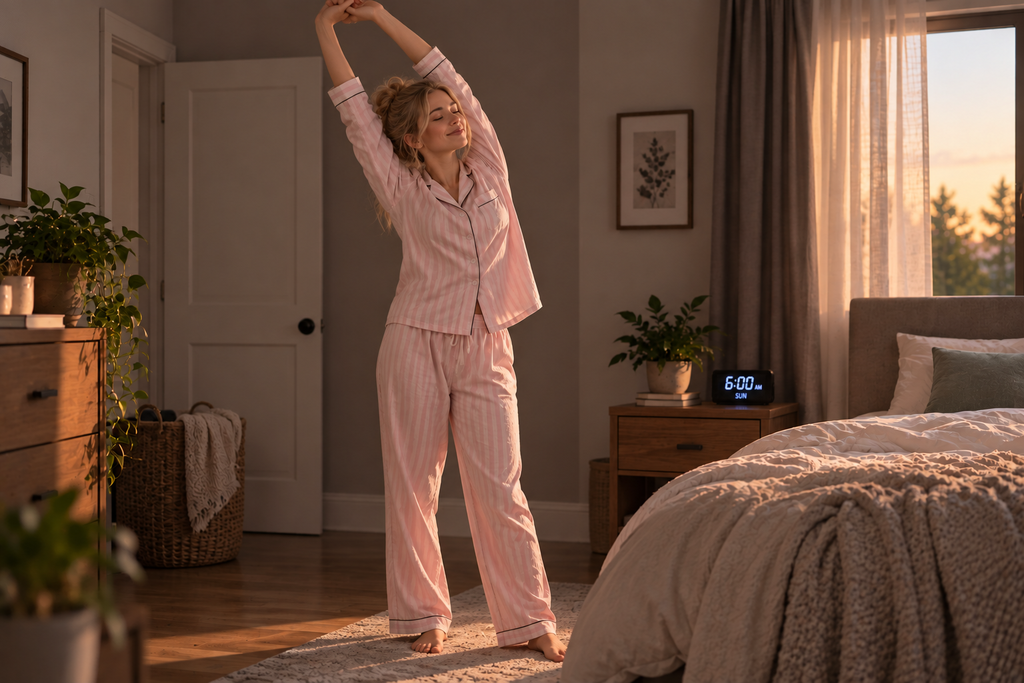
Remember when you could bend down to tie a shoe or reach the top shelf without a second thought? Joints and muscles tend to stiffen when we sit for long stretches, and balance slowly fades when we never challenge it. That’s often why a stumble on a curb, or a sore back after a long day at a desk, starts to feel more familiar with the years.
The fix is gentler than you’d think. When you wake up, before you reach for your phone, give yourself five minutes to stretch: reach your arms overhead, roll your shoulders, fold forward to loosen the backs of your legs, and circle your hips. Then, while you brush your teeth, stand on one leg and switch halfway through, holding the sink if you need to. It takes no equipment, and it helps you stay flexible, steady, and moving easily. If you sit most of the day, stand up and stretch for a minute every hour or so.
No habit stops aging, and genes, health conditions, and plain luck all play a part. If you manage a health condition, or you’re starting exercise after a long break, check with your doctor first. The goal isn’t to look twenty-five. It’s to feel strong, rested, and like yourself for as long as you can.
Frequently asked questions
What are the best habits to stay fit as you age? Regular walking, a little strength work each week, steady sleep, plenty of plants, and a few minutes of stretching and balance. They’re simple, gentle, and easy to start.
How many steps a day do I need? There’s no magic number. Many people aim for around 7,000, but any increase from where you are today helps.
Can habits really make you look younger? They can’t reverse aging, but good sleep, regular movement, and eating well can help your skin look healthier and your body feel more energetic.
Which habit should I start with? The easiest one. Stack it onto something you already do, like walking while you take a call or stretching right after you wake up.
Start with one favor
You don’t need all five by Friday. Pick the one that feels easiest and let it settle in before adding another. Years from now, you won’t remember a perfect routine. You’ll just be glad you kept the small ones.