


If you keep putting things off even when you know exactly what you need to do, it usually isn’t laziness. More often, you’re avoiding a feeling the task brings up: overwhelm, fear of getting it wrong, boredom, or not knowing where to begin.
Here’s why that happens, how to spot your own pattern, and a 30-second experiment that makes starting easier.
You sit down to do something important. You open your laptop. Check your phone “for just a minute.” Reply to one message. Make coffee. Forty-five minutes later, the thing that matters is still waiting.
Then the familiar thought arrives: “Why do I keep doing this? I know what I need to do. Why can’t I just do it?”
If that sounds like you, the problem may not be your discipline. It may be what your brain thinks it is protecting you from.
Why do I keep putting things off?
Most of the time, procrastination isn’t about the task itself. It’s about the feeling attached to it. Common reasons include:
- The task feels too big. There’s so much to do that you can’t see where to begin.
- You’re afraid of doing it badly. If it has to be perfect, starting feels risky.
- It matters to you. The more you care, the more pressure you feel.
- It’s boring or unclear. Nothing pulls you in, or you’re not sure what “done” looks like.
- Something easier feels better right now. Checking your phone offers instant relief.
That last point has research behind it. Psychologists Fuschia Sirois and Timothy Pychyl have argued that procrastination has a great deal to do with short-term mood repair: we step away from a task that stirs up uncomfortable feelings so we can feel better right now, even though we pay for it later (Sirois & Pychyl, 2013). Sirois has also described procrastination as an emotion regulation problem rather than a matter of laziness or poor time management (APA podcast).
Is procrastination just laziness?
Usually not. Think about it: you might happily spend an hour reorganizing your room, researching something random, or watching productivity videos while avoiding a 20-minute task that actually matters.
That tells you something important. Your brain isn’t necessarily avoiding effort. It’s avoiding a feeling: uncertainty, fear of getting it wrong, perfectionism, boredom, overwhelm, or the pressure that comes with knowing the task matters to you.
This is why “just be more disciplined” so often fails. You’re trying to solve an emotional problem with a productivity solution.
The same behavior can have very different reasons
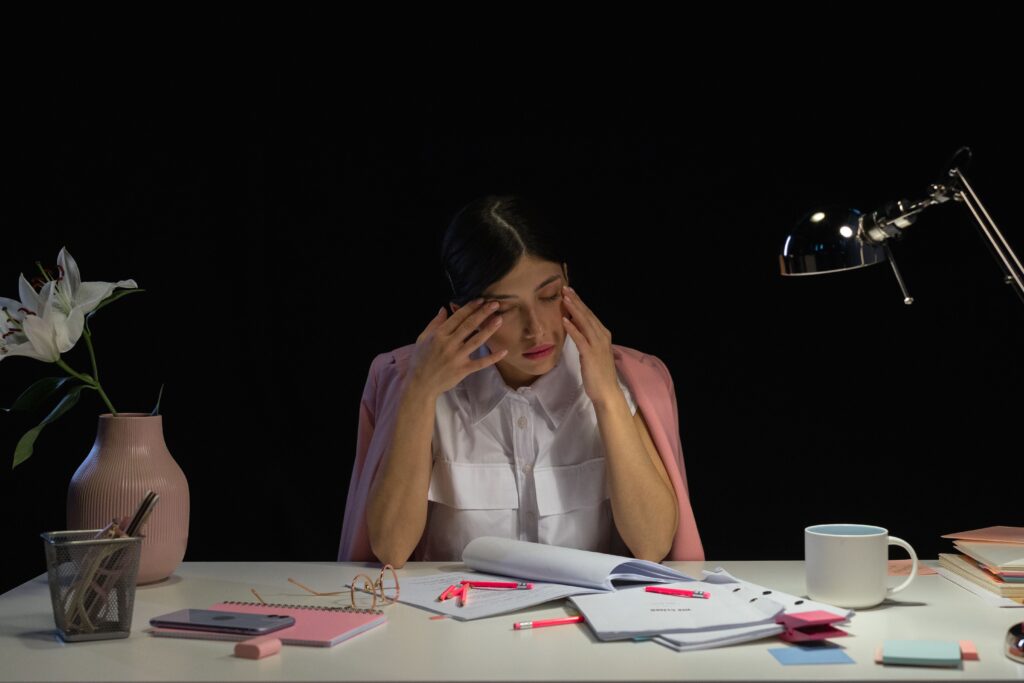
From the outside, procrastination always looks the same: you don’t do the task. Underneath, the reason can be completely different.
- You need to write an important article and think, “I have no idea how to make this good.” That’s fear of doing it badly.
- You need to study for an exam and think, “There’s so much to cover. Where do I even start?” That’s overwhelm.
- You’ve been putting off a project because finishing it means finding out whether you’re good enough. That’s fear of judgment.
This is why copying someone else’s productivity routine doesn’t always help. A fix built for overwhelm won’t work if your real issue is fear of failure.
How to find your procrastination pattern

Instead of asking, “How do I stop procrastinating?” ask, “What happens right before I procrastinate?”
Notice the moment you suddenly want to check your phone, make another coffee, or tidy your desk. What were you feeling? Often it’s a thought like:
- “This is too much.”
- “I don’t know how to start.”
- “It needs to be perfect.”
- “I’ll probably fail anyway.”
- “This is boring.”
- “I’ll feel better if I do something easier first.”
Once you know your pattern, you can choose a fix that fits it:
- Overwhelmed? Shrink the task.
- Afraid of failing? Separate finishing from doing it perfectly.
- Don’t know where to begin? Define one ridiculously small first step.
- Bored? Change your environment or add an immediate reward.
The goal isn’t to become someone who never procrastinates. It’s to recognize why you’re doing it and know what to do next.
Not sure which pattern is yours? Take the free Procrastination Scorecard.
It takes a couple of minutes and points you toward strategies that match your type.
A 30-second experiment for your next procrastination spiral
The next time you catch yourself avoiding something, don’t immediately force yourself back to work. Pause for 30 seconds and finish this sentence:
“I’m avoiding this because I feel ______.”
Don’t overthink it. Then ask: “What would make starting this feel 10% easier?”
Not 100% easier. Just 10%. For example:
- Open the document and write one messy sentence.
- Work for five minutes instead of an hour.
- Ask someone one question.
- Decide that your first attempt is allowed to be terrible.
Small starts work because they reduce the emotional resistance around the task. And once you begin, continuing is often much easier than starting.