
Some days, finding a moment of peace feels like another task on your to-do list.
There are emails waiting, work to finish, family responsibilities, and the strange habit our brains have of becoming especially active when we finally get into bed. Meditation and breathwork cannot make all of that disappear, but the right app can give you a small, reliable pause in the middle of it.
That is really what makes a meditation app useful. Not how many sessions it has. Not how impressive its feature list looks. It is whether you can open it on a stressful Tuesday and actually feel like using it.
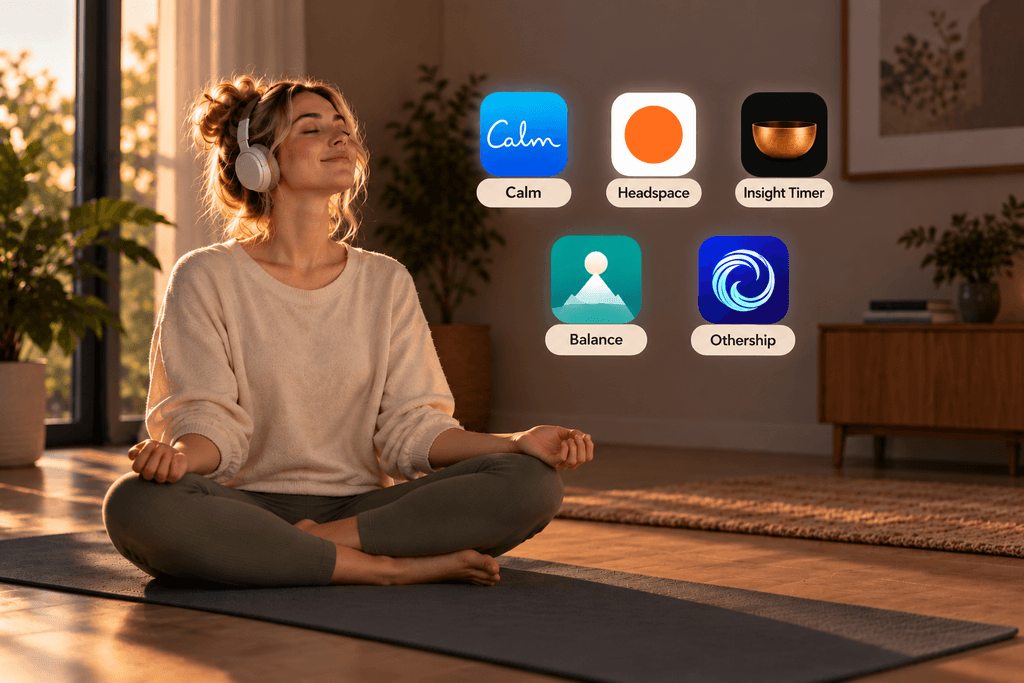
We looked at current Google Play and Apple App Store listings, independent reviews, and recent user discussions to find five apps worth considering. Each one has a different strength, and each has a few drawbacks you should know about before signing up.
The 5 apps at a glance
| App | Best for | Main drawback |
|---|---|---|
| Calm | Sleep and relaxation | Most of the library is premium |
| Headspace | Beginners | Subscription and interface complaints |
| Insight Timer | Free variety | Can feel overwhelming |
| Balance | Personalization | More structured and limited |
| Othership | Breathwork | Premium-focused |
1. Calm — Best for Sleep and Relaxation

Calm is probably the first app many people think of when they hear “meditation app,” and there is a reason for that.
It goes well beyond traditional meditation. You get guided mindfulness sessions, breathing exercises, Sleep Stories, music, soundscapes and programs designed around different everyday needs. Google Play currently shows a 4.5-star rating, while its listing includes both free and premium content.
Its sleep content is where Calm really shines. When your body is tired but your mind refuses to cooperate, having a familiar voice guide you through a story or relaxation session can feel much easier than trying to meditate in complete silence.
The downside is choice — and cost. There is a lot to explore, but much of it requires a subscription. Recent user reviews have also mentioned interface changes and frustration with the free experience.
Pros: Excellent sleep content, lots of variety, short sessions for busy days.
Cons: Limited free library, subscription required for much of the content, interface changes may frustrate some users.
Best for: People looking for one app that covers meditation, relaxation and sleep.
Android: Google Play
iPhone/iPad: App Store
2. Headspace — Best for Beginners
Meditation sounds simple until you actually sit down and try it.
Where should you focus? What happens when your thoughts wander? How long are you supposed to sit there?
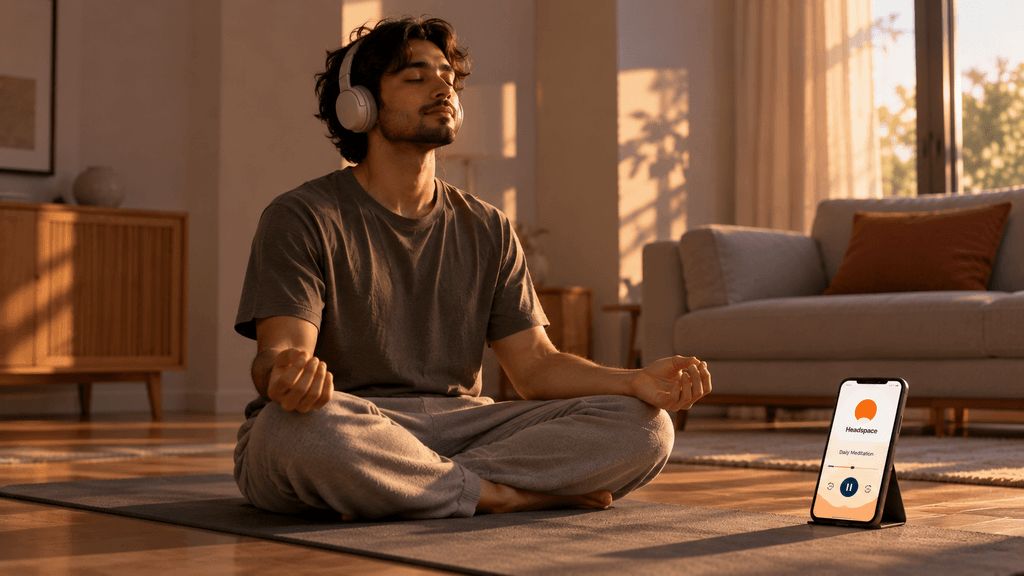
Headspace is designed to make those first steps less confusing. It offers guided courses, daily meditations, breathing exercises and sleep content, with sessions ranging from very short resets to longer practices. Its current App Store listing highlights hundreds of guided meditations.
That structure is probably its biggest advantage. You do not necessarily have to spend twenty minutes deciding which meditation to choose. You can simply follow the next lesson.
Independent reviews have consistently highlighted Headspace’s beginner-friendly approach. At the same time, recent Reddit discussions show complaints about the redesigned interface, navigation and occasional technical issues.
Pros: Easy for beginners, clear courses, approachable guidance, useful short sessions.
Cons: Much of the experience is paid, recent interface changes have divided users, less freedom than a huge open library.
Best for: Anyone who wants meditation explained rather than figuring it out alone.
Android: Google Play
iPhone/iPad: App Store
3. Insight Timer — Best for Free Variety
Insight Timer takes almost the opposite approach to Headspace.
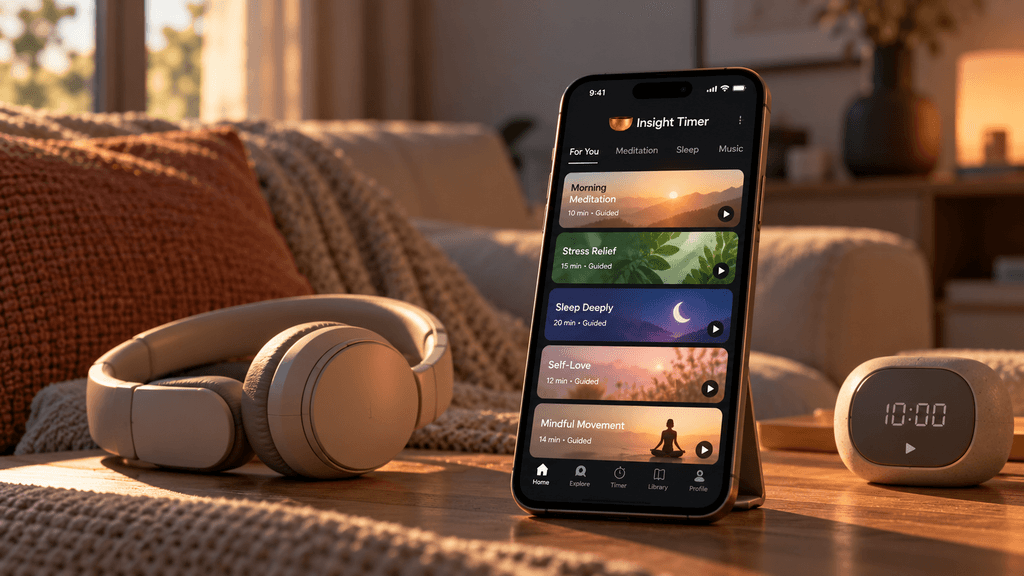
Instead of giving you a tightly curated path, it gives you an enormous library to explore. Its current Google Play listing advertises more than 100,000 guided meditations, along with a timer, music, talks, sleep content and other mindfulness tools.
That is fantastic when you already know what you like.
Maybe you want a ten-minute breathing exercise today and a longer body scan tomorrow. Maybe you prefer one teacher’s voice over another. Insight Timer gives you plenty of room to experiment.
But abundance comes with a price: decision fatigue.
Recent user reviews mention clutter, extra prompts and difficulty finding particular content after app changes.
Pros: Huge library, strong free offering, many teachers and meditation styles, useful timer.
Cons: Too much choice can feel overwhelming, interface complaints, premium prompts can become distracting.
Best for: People who want variety without immediately paying for a subscription.
Android: Google Play
iPhone/iPad: App Store
4. Balance — Best for Personalization

Balance takes a quieter approach.
When you start, it asks about your goals, experience and preferences, then uses that information to shape your meditation sessions. It also organizes practices into structured plans, including 10-day programs.
That can be surprisingly helpful.
When you are already overwhelmed, scrolling through hundreds of meditation choices can feel like more work. Balance tries to take some of that decision-making away.
Users frequently praise its straightforward structure and the feeling that sessions are tailored to them. However, reviews also mention occasional technical problems and concerns around subscriptions.
Pros: Personalized sessions, clear programs, less overwhelming, good for establishing a routine.
Cons: Smaller library, more structured experience, subscription may not suit everyone.
Best for: People who want guidance that feels more personal and less crowded.
Android: Google Play
iPhone: App Store
5. Othership — Best for Breathwork

Othership is the outlier on this list because breathwork is its main focus.
The app uses guided breathing combined with music, offering sessions that range from very short practices to longer experiences. Its current Google Play listing highlights hundreds of on-demand breathwork sessions covering goals such as energy, focus, relaxation and sleep.
The music-driven approach makes Othership feel different from a traditional meditation timer. For people who struggle to sit still and silently watch their thoughts, that can be a major advantage.
But this is also a more specialized app, and the full experience is primarily subscription-based. Recent users have praised the guidance and overall experience while questioning whether the price is worth it for occasional users.
Pros: Breathwork is the focus, engaging sessions, flexible lengths, immersive experience.
Cons: Subscription required for full access, more specialized than a general meditation app, not every breathing practice will suit every person.
Best for: Anyone who wants breathwork to be the center of their wellness routine.
Android: Google Play
iPhone: App Store
The best app is the one you will actually use
It is tempting to compare meditation apps by counting features, sessions and star ratings.
But calm does not work that way.
The app with thousands of meditations is not necessarily more useful than the one with twenty sessions you genuinely enjoy. A beautifully designed program means very little if you stop opening it after a week.
Think about what you actually need.
Choose Calm when sleep and winding down are the priority. Headspace makes sense when you are starting from scratch and want structure. Insight Timer is appealing when free access and variety matter most. Balance is a good fit when personalization makes it easier to build a habit. And Othership is worth looking at when you are especially interested in guided breathwork.
There is also no rule saying you have to meditate for twenty or thirty minutes.
Start with five minutes.
Use a breathing exercise before an important meeting. Try a short meditation when you get home from work. Put on a sleep session when your thoughts refuse to settle.
The goal is not to become perfectly calm.
It is simply to give your mind somewhere quieter to go.
And on a busy day, that small pause can be enough.