
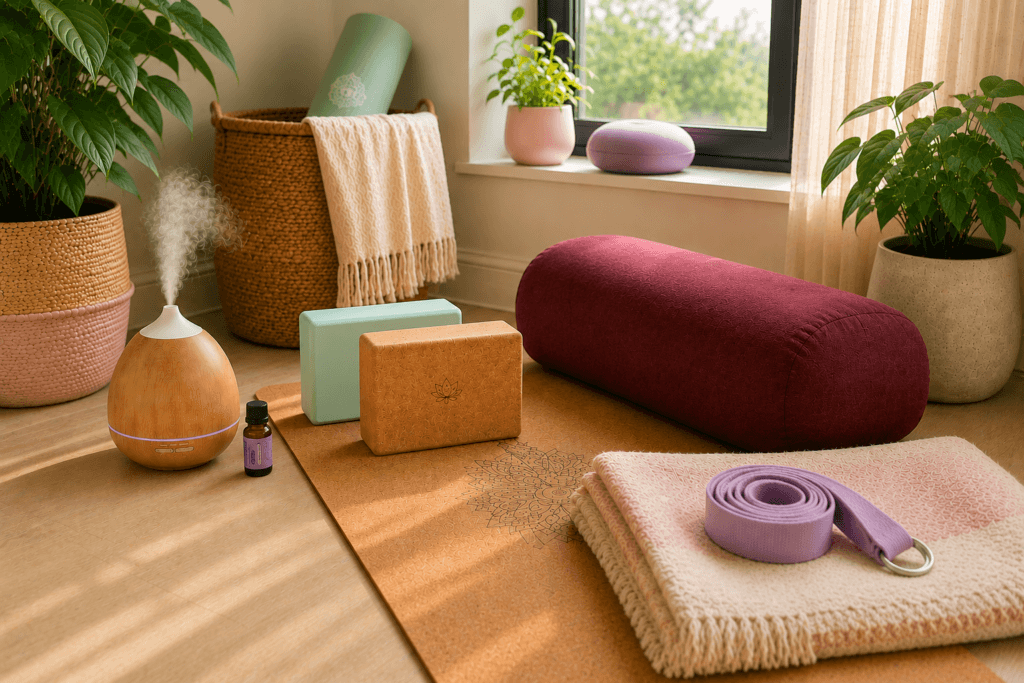
You don’t need a spare room, a perfectly quiet house, or a picture-perfect yoga studio to make practicing at home feel good.
Sometimes all you have is a corner of the living room, a mat that gets rolled up after every session, and a few minutes before the rest of the day takes over. That’s enough.
The trick is to make that small space feel different from the rest of your home. A comfortable mat, softer lighting, a blanket within reach, and a few natural materials can create a simple cue that tells you: this is where we slow down.
And you don’t have to fill the room with new things to get there. A few thoughtful choices can make your practice more comfortable while helping you choose materials that better fit your preferences.
Here are seven eco-friendly yoga essentials that can help turn an ordinary corner of your home into a space you’ll actually want to return to.
Why Natural Materials Can Make Your Practice Feel Better
Your mat, blocks, blanket, and strap aren’t just props. They’re what your body touches throughout your practice.
Materials such as cork, natural rubber, organic cotton, and recycled fibers can bring different textures, warmth, and support to your practice.
When shopping, don’t rely only on the words “eco-friendly” on a product label. When possible, look for credible certifications such as:
- Global Organic Textile Standard (GOTS): Helps verify organic fibers and environmental and social standards.
- OEKO-TEX Standard 100: Indicates that textile components have been tested for certain harmful substances.
- Forest Stewardship Council (FSC): Helps identify wood and cork products sourced from responsibly managed forests.
You don’t have to find the “perfect” eco-friendly product. Look for durable materials, useful features, and construction that suits the way you’ll actually use the item. The recommendations below give you a place to start.
1. A Natural-Material Yoga Mat: Start With the Foundation
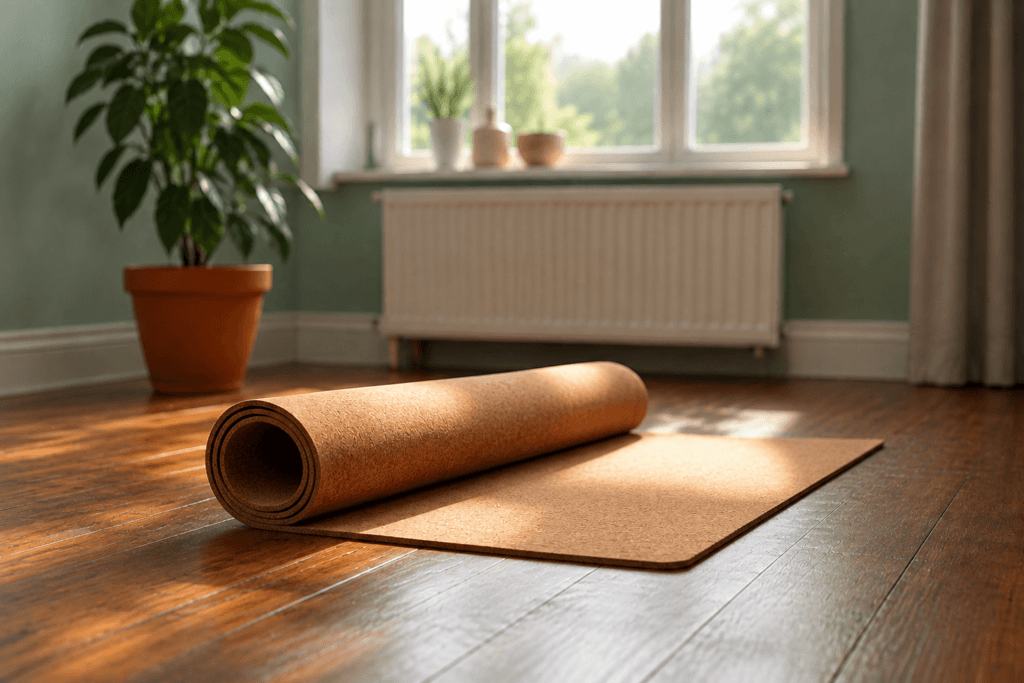
Your mat is where almost every practice begins, so it’s worth choosing one that feels stable and comfortable beneath you.
A cork mat with a natural rubber backing is a good option if you want to move away from PVC-heavy or highly synthetic mats. Cork also has a naturally textured surface that can provide good grip as your hands warm up during practice.
A rubber backing helps keep the mat steady on common home surfaces such as hardwood or carpet. That matters when you want to focus on your practice instead of worrying about your mat moving underneath you.
Top Pick: Consider the Manduka eKO Natural Rubber Yoga Mat.
Another option: Consider the Gurus Roots Cork Yoga Mat.
2. Cork Blocks: Stable Support When You Need It
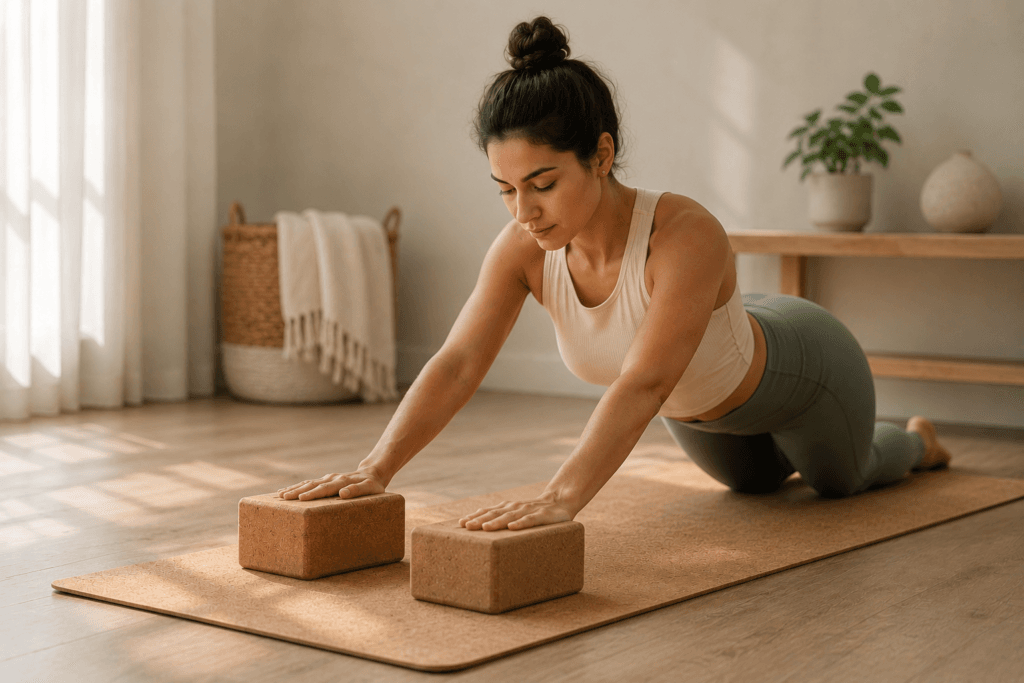
You don’t have to be flexible or advanced to benefit from yoga blocks.
A good block gives you somewhere to reach for when the floor feels too far away. It can help you feel more supported in certain poses and make uncomfortable positions easier to modify.
Cork gives you a firmer, more stable surface than softer foam, which can feel reassuring when you’re putting weight through your hands.
Look for smooth, beveled edges so the blocks feel comfortable to hold.
Top Pick: Consider the Manduka Cork Yoga Block.
Another option: Consider the Gaiam Yoga Block
3. A Yoga Bolster: Make Resting Easier
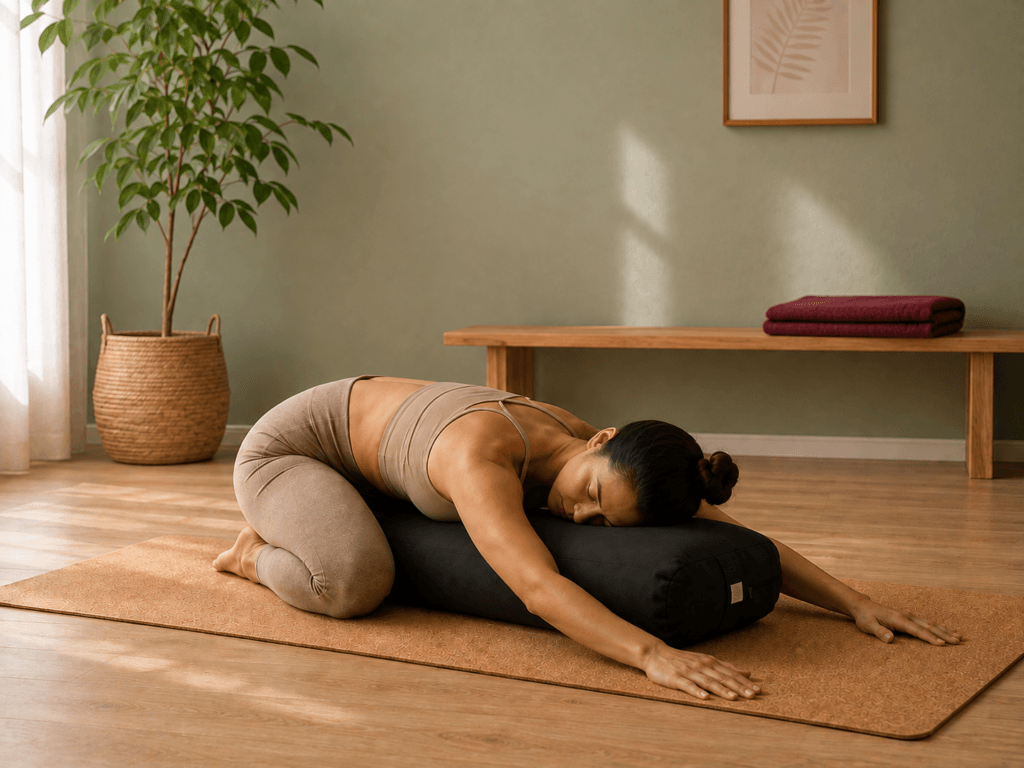
Yoga isn’t only about stretching farther or holding challenging poses.
Sometimes the most valuable part of a practice is simply being able to relax without fighting your own body.
A bolster gives you comfortable support during restorative poses, child’s pose, heart openers, and longer holds. If natural materials are a priority, look for an organic cotton cover. For the filling, you’ll find both natural options such as kapok or buckwheat and synthetic options designed to provide firm support.
A removable, washable cover is also worth looking for. It makes keeping your bolster fresh much easier.
Top Pick: Consider the Node Fitness Organic Cotton Rectangular Yoga Bolster.
Another option: Consider the Hugger Mugger Yoga Bolster.
4. A Cotton Yoga Strap: Give Yourself a Little More Reach
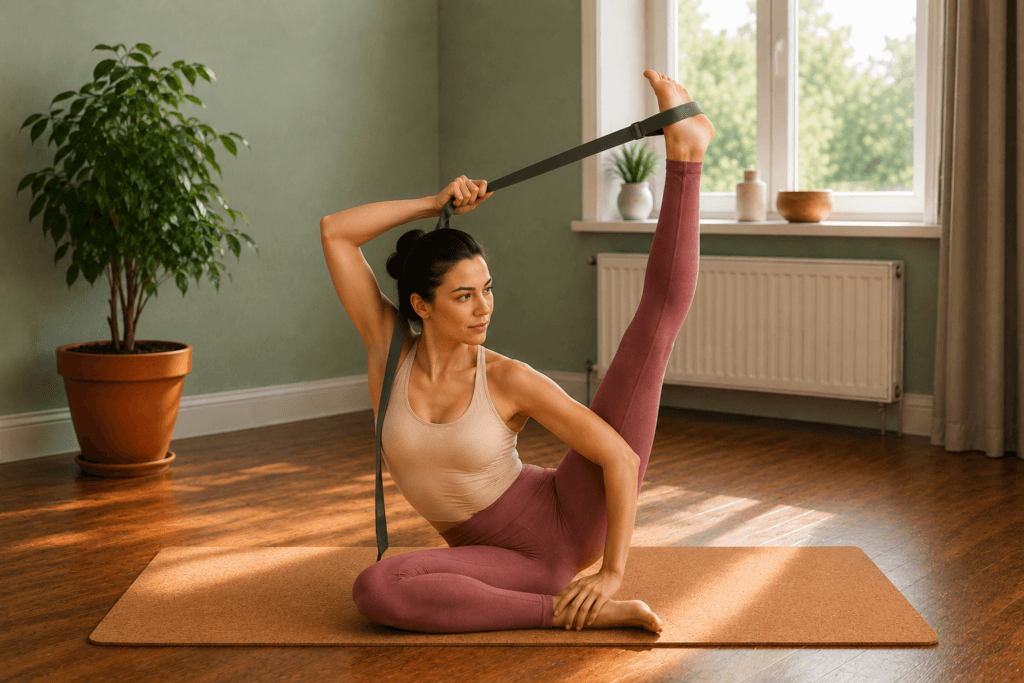
A yoga strap can make certain stretches feel much more accessible.
Instead of forcing your hands to meet when they simply aren’t there yet, a strap gives you a little extra reach. It’s useful for hamstring stretches, shoulder openers, seated folds, and many other poses.
If natural materials are a priority, look for a cotton strap with a sturdy metal buckle or D-ring. Organic cotton is another option if that’s important to you.
The point isn’t to push yourself further than your body is ready for. It’s to give yourself another way into a pose.
Top Pick: Consider the Tumaz Organic Cotton Yoga Strap.
Another option: Consider the Manduka Align Yoga Strap
5. A Blanket: The Most Versatile Extra
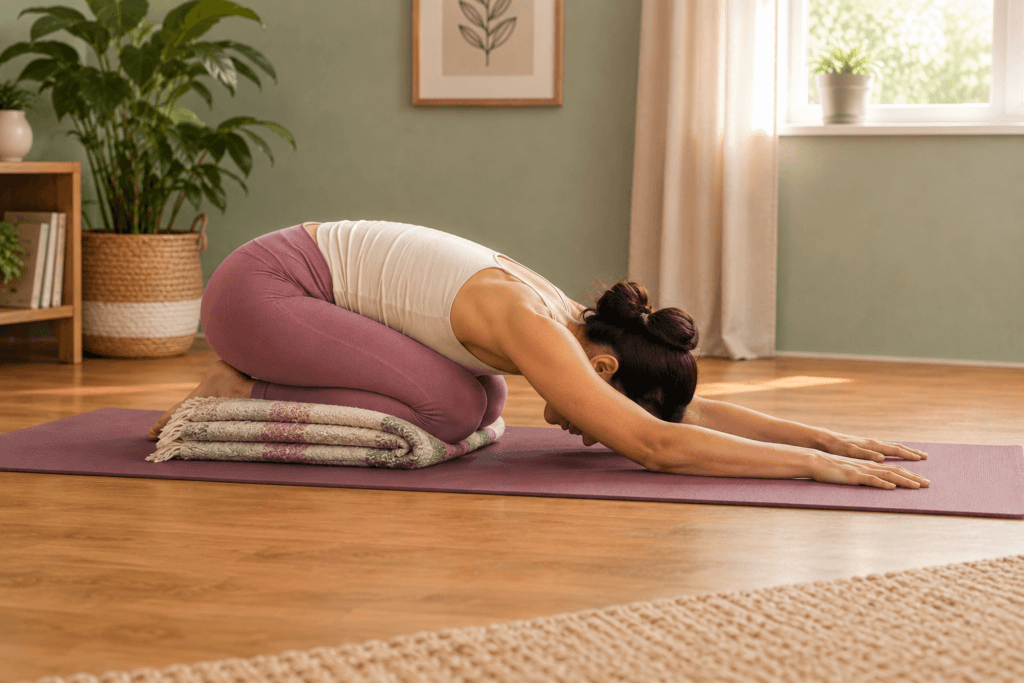
If you have room for one more thing beside your mat, don’t overlook a good blanket.
A dense blanket made from wool, recycled fibers, cotton, or another comfortable material can do several jobs at once. Fold it under your knees for extra cushioning, place it beneath your pelvis for support, or use it during Savasana when your body starts to cool down.
It’s also easy to move and store when your yoga space needs to become a living room again.
Top Pick: Consider the Benevolence LA Authentic Mexican Yoga Blanket.
Another option: Consider the Manduka Recycled Wool Yoga Blanket.
6. A Gentle Scent: Create a Cue to Slow Down
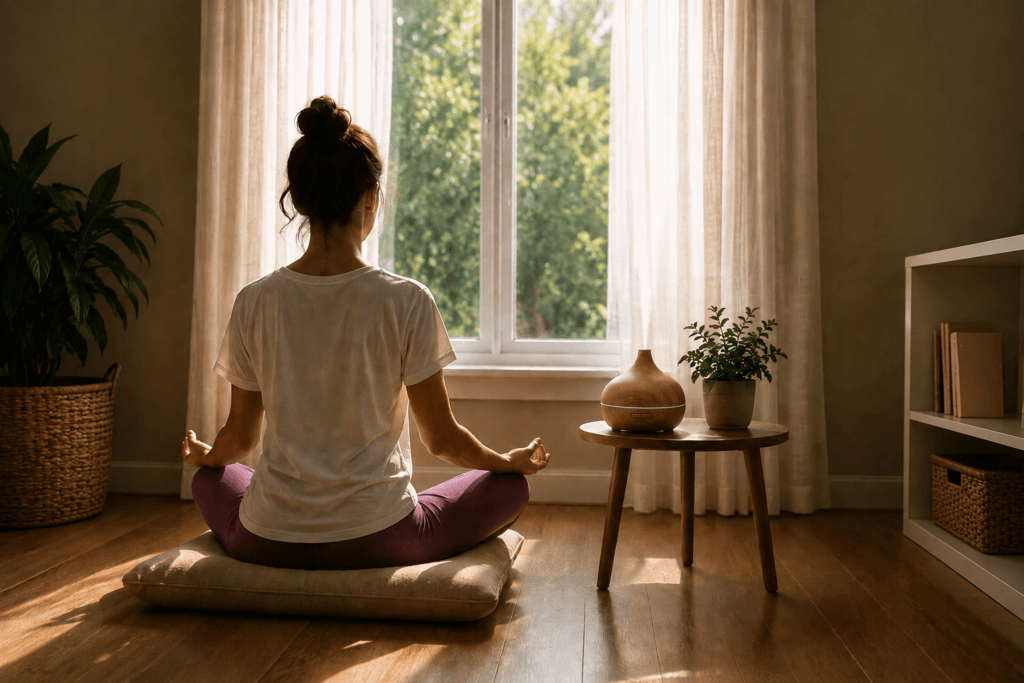
Your home has a lot going on.
The same room might be where you answer emails, eat lunch, watch television, fold laundry, and scroll through your phone. It can be difficult to suddenly expect your mind to switch into a calmer state just because you’ve unrolled a yoga mat.
A familiar scent can become a small boundary between the rest of your day and your practice.
If you enjoy scent, choose something subtle that you genuinely like. Lavender, eucalyptus, or cedarwood are options, but the best choice is simply a scent that makes the space feel pleasant to you.
If you use a diffuser, look for one that suits the size of your space, is easy to clean, and has useful features such as automatic shutoff.
Top Pick: Consider the ASAKUKI 500ml Premium Ultrasonic Essential Oil Diffuser.
7. Warm, Dimmable Lighting: Change the Mood of the Room
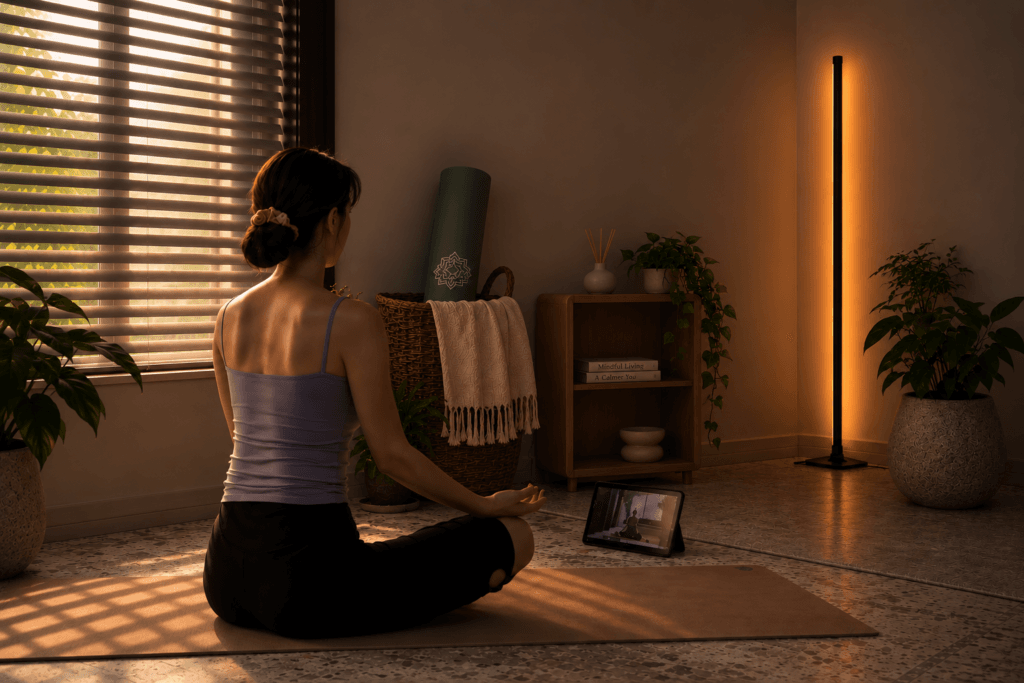
Lighting can completely change how a room feels.
Harsh overhead lights can make a space feel bright and busy when you’re trying to settle down. Softer, warm lighting creates a gentler atmosphere for stretching, meditation, and Savasana.
Choose dimmable lamps, warm bulbs, or other soft light sources rather than relying entirely on bright overhead lighting. Even switching off the main light and turning on one warm lamp can make the room feel different.
Top Pick: Consider the Brightech Maxwell LED Dimmable Shelf Floor Lamp.
Another option: Consider the Govee RGBIC Warm Dimmable Smart Floor Lamp.
Choose What Fits Your Practice and Budget
The products above are Mindful Elements’ handpicked recommendations, but they’re not the only choices worth considering. You don’t need to buy everything at once.
What matters most is finding the qualities that work for your practice—whether that’s a firm cork block, a natural-rubber mat, an easy-to-wash cover, or softer lighting.
Use these picks as a starting point, then compare similar products based on the materials, features, quality, and budget that make sense for you.
How to Make Your Yoga Gear Last
Taking care of what you already own is part of creating a more sustainable practice, too. You don’t need to constantly replace your gear to create a better space.
Care instructions can vary from one product to another, so check the manufacturer’s label before washing or cleaning your gear.
| Material | Cleaning Routine | Drying & Storage |
|---|---|---|
| Natural Cork | Wipe with a damp cloth and mild cleaning solution. | Air dry completely before rolling. Keep away from prolonged direct sunlight. |
| Natural Rubber | Wipe down with a soft cloth and an appropriate mild cleaning solution. | Air dry away from direct sunlight. |
| Organic Cotton | Follow the manufacturer’s washing instructions; gentle, cold washing is common. | Line dry or follow the product’s specific instructions. |
| Recycled Wool | Follow the manufacturer’s care instructions, as wool often needs gentle or specialized cleaning. | Avoid high heat and aggressive machine drying. |
Creating a Yoga Space in a Shared Room
Not everyone has a spare room waiting to become a home studio.
Maybe your yoga space is also your bedroom. Maybe your living room becomes your practice area for twenty minutes and then needs to go back to being a living room.
That’s completely fine.
The goal isn’t to recreate a professional studio. It’s to create a small area that feels intentional enough to help you switch gears.
1. Define Your Space
Unroll your mat in the same general spot whenever possible. Face it toward an uncluttered wall or window, and give yourself enough room to move without constantly bumping into furniture.
You don’t need a permanent room. A consistent location can be enough to make your practice feel easier to return to.
2. Give Everything a Home
When you’re finished, put your blocks, bolster, blanket, and strap into a woven jute or seagrass basket.
This keeps your equipment together and makes the room easy to reset.
More importantly, it removes one small barrier to your next practice: having to find everything first.
3. Soften the Room
Hard floors and empty walls can make a room feel louder than it needs to be.
Curtains, blankets, rugs, and other soft textiles can make the space feel quieter and more comfortable. A few plants can also soften a room visually without requiring a major redesign.
The goal isn’t perfection.
It’s simply to make the space feel a little less like the place where everything else happens.
You Don’t Need a Perfect Studio
A home yoga space doesn’t have to look like a studio.
You don’t need a dedicated room, expensive equipment, or a perfectly quiet house. Start with what you already have. Put down your mat. Keep a blanket nearby. Soften the lighting. Put your props in one basket. Add a scent you enjoy if it helps you settle in.
The real luxury isn’t having a perfect yoga room. It’s having a small corner of your life where slowing down feels natural.