

When every payday feels like a short sigh of relief before another wave of bills arrives, the routine can quickly become exhausting. You wait for money to land, watch it disperse into rent, utilities, minimum payments, and groceries, and then start counting down the days until the next check arrives. If this cycle feels familiar, you are in very good company.
Living paycheck to paycheck is rarely a matter of personal laziness or a lack of financial understanding. More often, it stems from a mismatch between when money arrives and when obligations are due, made trickier by rising living costs and unpredictable expenses. The good news is that breaking out of this cycle does not require an overnight transformation or living on an extreme financial lockdown. By getting clear on your cash flow, creating a small protective buffer, and adjusting higher monthly expenses, you can create genuine breathing room.
What It Means to Live Paycheck to Paycheck

At its core, living paycheck to paycheck means your immediate living costs swallow nearly all of your incoming pay. That leaves little to no room for savings, debt reduction, or unexpected expenses. In this situation, even a minor setback—like a basic car repair or a routine medical bill—can disrupt an entire month’s budget.
This reality affects people across many income levels. According to Bank of America Institute’s analysis of its internal consumer data, nearly 25% of U.S. households were estimated to be living paycheck to paycheck in 2025. Other consumer surveys have produced substantially higher figures. For example, PYMNTS Intelligence reported that 67% of Americans said they were living paycheck to paycheck in January 2025, including about 50% of consumers earning $100,000 or more. These figures are not directly comparable because different organizations use different definitions and methods to measure paycheck-to-paycheck living.
Recognizing that this cycle often comes down to structural timing rather than personal failure helps remove judgment from the process. Managing money isn’t just about math; it’s about building a rhythm that supports your daily life without constant stress.
Step 1: Perform a Cash-Flow Audit (Without Self-Judgment)
Before picking a new direction, it helps to have an accurate picture of where your money actually goes each month. Building a plan around estimates often leads to frustration when uncounted expenses pop up later.
Setting aside an hour to review bank and credit card statements from the past 1–3 months can bring clarity. As you review your transactions, consider grouping them into three basic categories:
- Fixed commitments: Predictable recurring costs like rent, mortgage, insurance premiums, car loans, and debt minimums.
- Variable necessities: Day-to-day essentials where amounts shift, such as groceries, fuel, and utilities.
- Discretionary choices: Flexible spending on dining out, streaming services, hobbies, and personal purchases.
While reviewing spending, look for quiet drains—like unused subscriptions or account fees—that add up without offering real value. The goal here is simple clarity rather than self-criticism. Knowing your starting baseline gives you a practical foundation to work from.
Step 2: Focus on Your Core Foundations (“The Four Walls”)
When cash flow is tight and multiple bills arrive at once, figuring out what to pay first can feel overwhelming. One budgeting framework, popularized by Ramsey Solutions, is the “Four Walls.” It focuses on the basic expenses needed to keep a household functioning: food, utilities, shelter, and transportation.
The Four Walls cover:
- Food: Basic household groceries to keep you and your family fed.
- Utilities: Essential electricity, heating, water, and basic phone or internet services required for work and daily life.
- Shelter: Rent or mortgage payments and related housing costs needed to keep a roof overhead.
- Transportation: Minimum auto expenses, gas, or public transit passes needed to reach work and manage caretaking duties.
Prioritizing these essentials can help protect your basic stability when money is especially tight. Once those needs are accounted for, you can turn your attention to other obligations and debts according to their urgency and consequences.
Step 3: Build a Starter Cash Cushion
One reason the paycheck-to-paycheck cycle persists is that minor surprises—a plumbing issue or a flat tire—often get pushed onto credit cards or loans. That creates new monthly payments, tightening the budget even further.
Building a small emergency reserve can help break that pattern. For example, you might start by setting aside 1–2% of each paycheck until you have a small amount of accessible savings. As your cash flow improves, you can gradually increase the percentage.
The Consumer Financial Protection Bureau notes that even small amounts of emergency savings can provide some financial security, particularly for people who are already struggling with cash flow. A dedicated savings account can also make it easier to keep emergency money separate from everyday spending.
If you feel torn between paying down debt quickly and saving, starting with a modest cash buffer can be practical. Having accessible funds may help you handle an unexpected expense without immediately turning to new credit or loans.
A separate savings account, including a high-yield savings account (HYSA), can be one option for keeping emergency money distinct from everyday spending. Savings rates can change over time, so the priority should be having money that is accessible and available when you need it.
Step 4: Choose a Budget Method That Matches Your Income
Not everyone gets paid on a standard, predictable schedule. Finding an approach that fits how your money actually arrives makes managing cash flow much easier.
For Predictable Earners: Zero-Based Budgeting
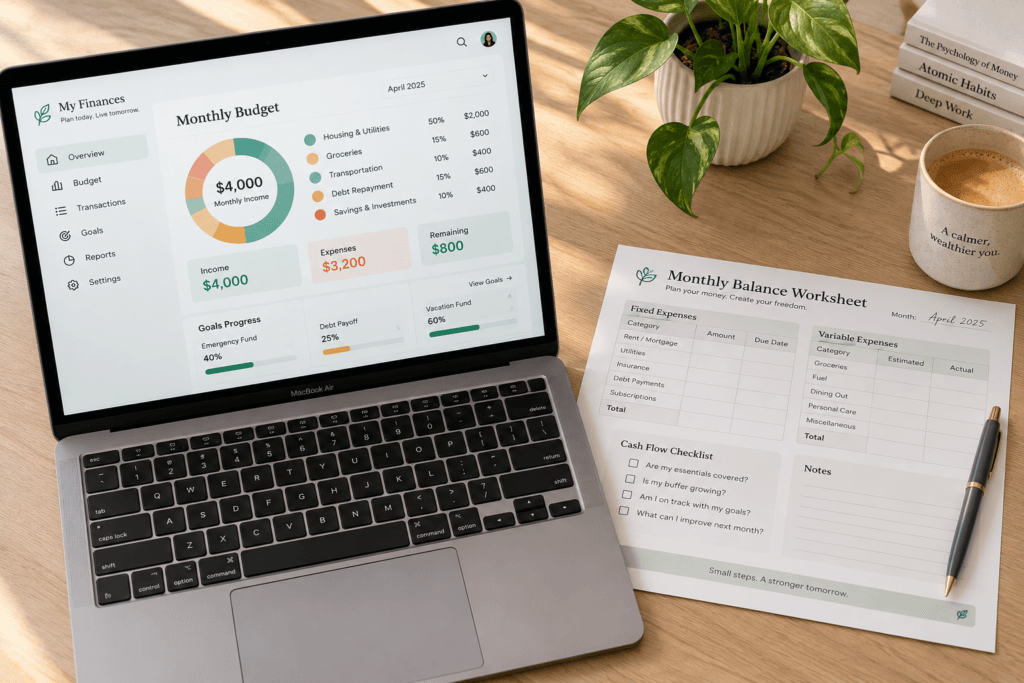
If your income arrives in steady amounts on a regular timeline, zero-based budgeting can be an effective fit. In a zero-based budget, every dollar of monthly income gets a job before the month starts—whether for housing, groceries, debt payments, savings, or other priorities—so your planned income minus your planned allocations equals zero.
The idea is not to literally empty your bank account, but to give your available money a deliberate purpose.
For example, if someone brings home $4,000 a month, they might allocate 50% to essential expenses, 15% to debt repayment, 15% to savings, 10% to transportation and other necessary costs, and 10% to flexible spending. The exact percentages should change according to the person’s circumstances rather than being treated as a universal formula.
Tools like YNAB (You Need A Budget) or EveryDollar use variations of this approach to help people plan and track where money goes.
For Variable Earners: A Conservative Budget for Variable Income
If you rely on freelance projects, commissions, tips, or gig work, rigid monthly targets can feel unrealistic. Building your essential budget around a conservative income estimate can provide a more stable baseline:
- Set your baseline: Plan essential monthly costs around your lowest or more conservative estimate of expected earnings.
- Use a buffer account: Direct incoming payments into a dedicated buffer account, paying yourself a more predictable amount into your main checking account when possible.
- Direct extra income deliberately: In higher-earning months, route surplus funds toward your emergency reserve or use them to prepare for upcoming lower-earning months.
The goal is to avoid treating a particularly strong month as your new normal. A conservative baseline gives variable earners more room to absorb fluctuations when income falls.
Step 5: Look at Major Overhead Beyond Small Cuts
When shifting spending habits, it’s common to start by cutting out everyday enjoyments like a morning coffee or an occasional treat. While mindful spending helps, focusing only on tiny daily adjustments can cause budget fatigue without significantly changing your monthly cash flow.
To make meaningful progress, focus on larger recurring costs:
- Negotiate provider rates: Call utility companies, internet providers, and phone carriers to ask about current promotional pricing or practical service tiers.
- Compare insurance options: Request quotes for auto and home insurance from multiple providers each year to see if equivalent coverage costs less elsewhere.
- Re-evaluate larger commitments: If housing or vehicle costs swallow a large share of your earnings, consider long-term options like taking on a roommate, exploring whether refinancing a high-interest auto loan could reduce your overall costs, or adjusting transportation arrangements when practical.
Even a reduction of 2–5% in major recurring expenses can create ongoing relief without requiring daily decision-making. The exact savings will depend on your circumstances, but recurring expenses are often worth examining because a reduction can continue month after month.
Navigating Budget Fatigue and Mindful Habits

Improving financial habits is an ongoing process rather than a quick sprint. Pushing frugality to an extreme can backfire, leading to exhaustion and eventual impulse purchases.
Building flexible room into your plan helps maintain momentum. Including a modest, planned allowance for personal enjoyment lets you live without constant guilt. It also helps to notice emotional triggers that lead to impulsive shopping or takeout orders, such as fatigue, work stress, or boredom.
Focusing on consistent, step-by-step adjustments creates practical financial stability that fits into your life over the long run.
A Note Before You Go
There is no single budgeting method that works for everyone. Your income, debt, household responsibilities, housing costs, financial goals, and unexpected expenses all affect what makes sense for you.
The strategies in this article are intended as general educational information, not individualized financial advice. Before making significant financial decisions—such as refinancing a loan, changing insurance coverage, taking on new debt, or making major changes to your savings strategy—consider your own circumstances and, when appropriate, consult a qualified financial professional.
The goal isn’t to create a perfect budget.
It’s to create a little more breathing room, one decision at a time.