

I used to wear myself thin and call it love.
Every time I said yes when I meant no, something in me folded a little further inward — quietly, invisibly, like a page creased so many times it forgets how to lie flat. I smiled through discomfort. I nodded through frustration. I gave from a place that was already empty. And for years, I believed that made me a good person.
It didn’t. It just made me tired.
If you’re someone who shows up for everyone else, on demand, without fail — you already know the particular kind of loneliness that creates. You can be surrounded by people who need you and still feel like no one actually sees you. I know, because I lived there for a long time before I understood why.
Why We Confuse Self-Sacrifice With Love
I told myself I was just generous. Helpful. The reliable one. But underneath the story I was telling myself was a quieter, less flattering truth: I was afraid that if I stopped being useful, I’d become easy to forget.
So I didn’t rest. I didn’t decline. I didn’t ask for anything in return. I just kept giving, assuming that eventually it would feel like enough.
It never did.
The realization arrived slowly, the way light creeps under a closed door before you notice the room has changed. One quiet evening, sitting alone, it hit me: I had been keeping everyone else warm by burning fires built from my own bones.
That was the moment something had to shift — not in how I treated other people, but in how I treated myself.
5 Things That Helped Me Set Boundaries Without Guilt
Unlearning a lifetime of people-pleasing didn’t happen overnight. But these five shifts changed everything.
1. I Gave Myself Permission to Be a Priority
This was, by far, the hardest part. I had to unlearn the belief that focusing on my own needs made me selfish — and relearn that carrying everyone else’s burdens wasn’t actually generosity. It was self-erasure wearing generosity’s clothes.
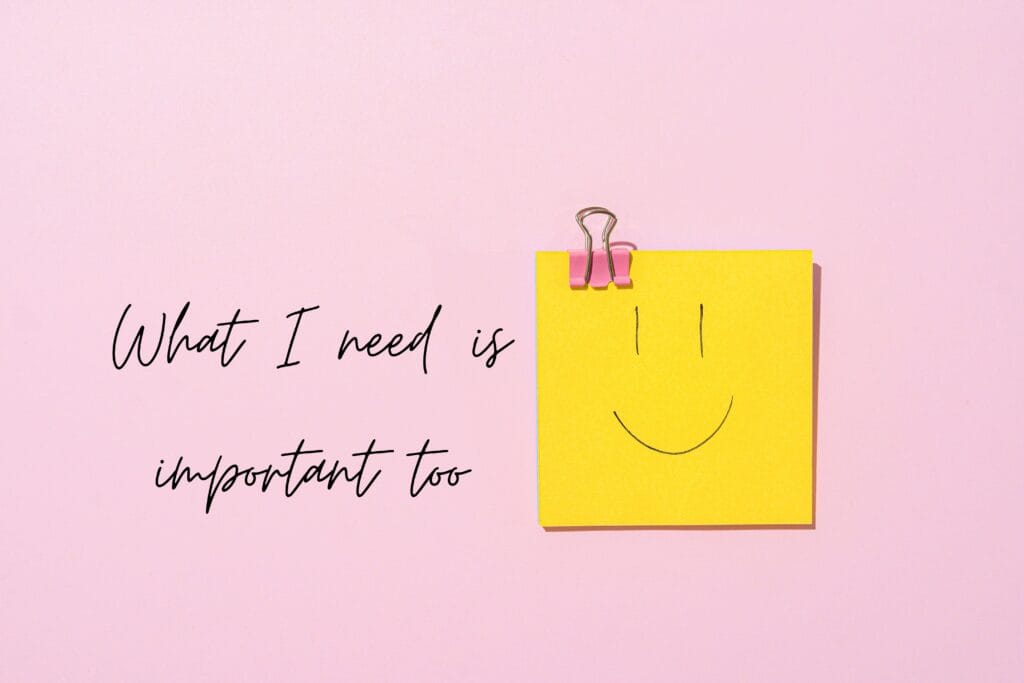
I wrote myself a sticky note: “What I need is important, too.” I stuck it on my mirror and read it daily, not because I believed it yet, but because I needed to — until eventually, I did.
2. I Replaced Guilt With Grace
Guilt has a familiar voice. It whispers, “You’re letting them down.” For years, I let that voice win every argument.
Now, when it shows up, I answer differently: “Maybe. But I’m also honoring myself.”
Here’s the shift that changed everything: setting boundaries isn’t about building walls to keep people out. It’s about placing a gentle fence around your peace and saying, this far, and no further.
3. I Stopped Explaining Myself to Be Understood

I used to defend my “no” like I was standing trial — justifying it, cushioning it, apologizing before I’d even finished the sentence.
I’ve since learned that truth doesn’t need a performance. A simple, kind “I’m not able to” carries more weight than a nervous, over-explained excuse ever could. The people who respect you don’t need a case built for your boundary. They just need to hear it.
4. I Started Listening to My Body
This one changed how I read every relationship in my life. My body had been telling me the truth long before my mind caught up.
A tightening chest. Shallow breath. A subtle urge to make myself smaller in a room. Those weren’t random — they were my intuition, waving a flag I’d learned to ignore. Once I started paying attention to who left me feeling drained and who left me feeling whole, boundary-setting stopped being an emotional negotiation. It became information I could actually trust.
5. I Accepted That Disappointing Others Was Inevitable — Abandoning Myself Wasn’t
When I stopped being endlessly available, some people pulled back. That stung more than I expected.
But it taught me something important: the right people adjust when you change. The ones who punish you for having limits were never actually invested in you — just in your availability.
Eventually, I understood the choice in front of me clearly: I could keep disappointing others, or I could keep disappointing myself. I chose myself.
Life Since Then
It hasn’t been perfect. But it’s been honest — and that’s a trade I’d make every time.
There’s a quiet kind of power in knowing your own limits. In choosing peace over performance. In stepping out of conversations that cost you your calm.
I don’t feel guilty anymore. I feel free.
If Your Heart Feels Tired, Read This
If any of this sounds familiar, here’s what I wish someone had told me sooner:
You’re allowed to be a whole person — not just the parts of you that serve others. You can love deeply and still choose distance. You can care and still say no. You can be kind without being a doormat. Your worth was never tied to how much of yourself you were willing to shrink.
You don’t owe anyone an explanation for protecting your own light.
So take up the space. Say the hard no. Rest without having to earn it first. And the next time guilt comes knocking — let grace answer the door instead.
If this resonated with you, start small this week: pick one situation where you’d normally say yes out of guilt, and practice saying no with kindness instead. That one moment is where the shift begins.