
There are certain questions that follow us through almost every stage of life.
How should I handle my money? Why is it so difficult to build healthy habits? Am I spending my energy on the things that actually matter? How much should I care about what other people think? And perhaps the biggest question of all: What does a good life actually look like for me?
The answers change as life changes.
Someone starting their first job may be learning how to manage money. Someone raising a family may be thinking about financial security and priorities. Someone changing careers may be questioning everything they thought they wanted. And someone who has already achieved many of their goals may still be wondering whether those goals were actually theirs.
That’s why the right books can be valuable.
Not because they give you a formula for living well, but because they offer new ways to look at choices you’re already making.
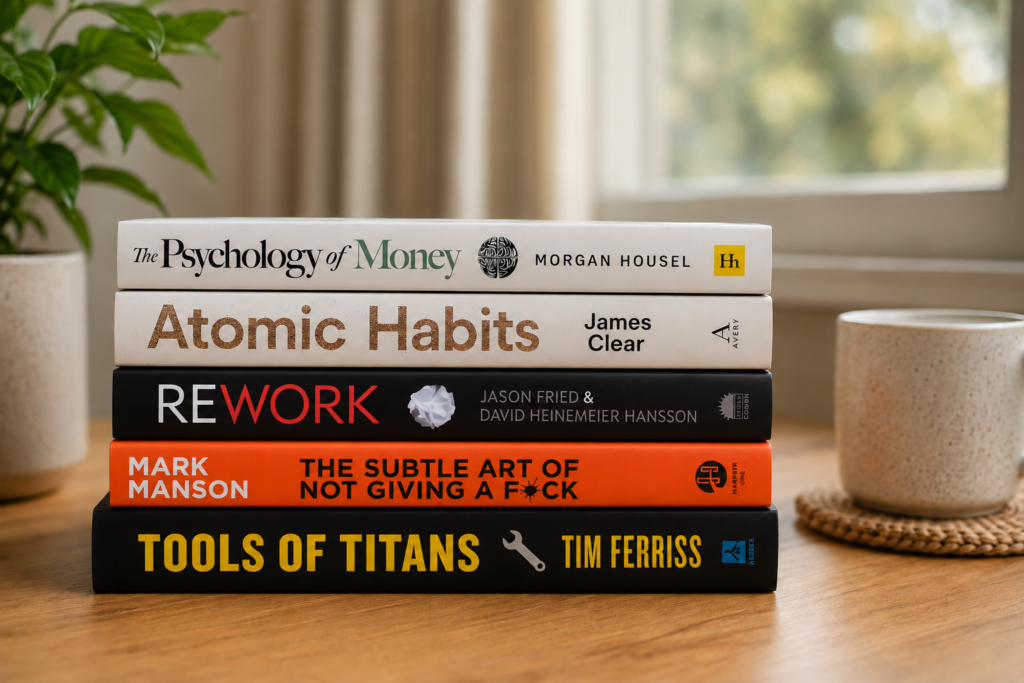
These five books explore money, habits, work, attention and personal responsibility. They aren’t perfect, and you don’t have to agree with everything they say. But each contains ideas that can make you pause, question an old assumption and perhaps approach something in your life a little differently.
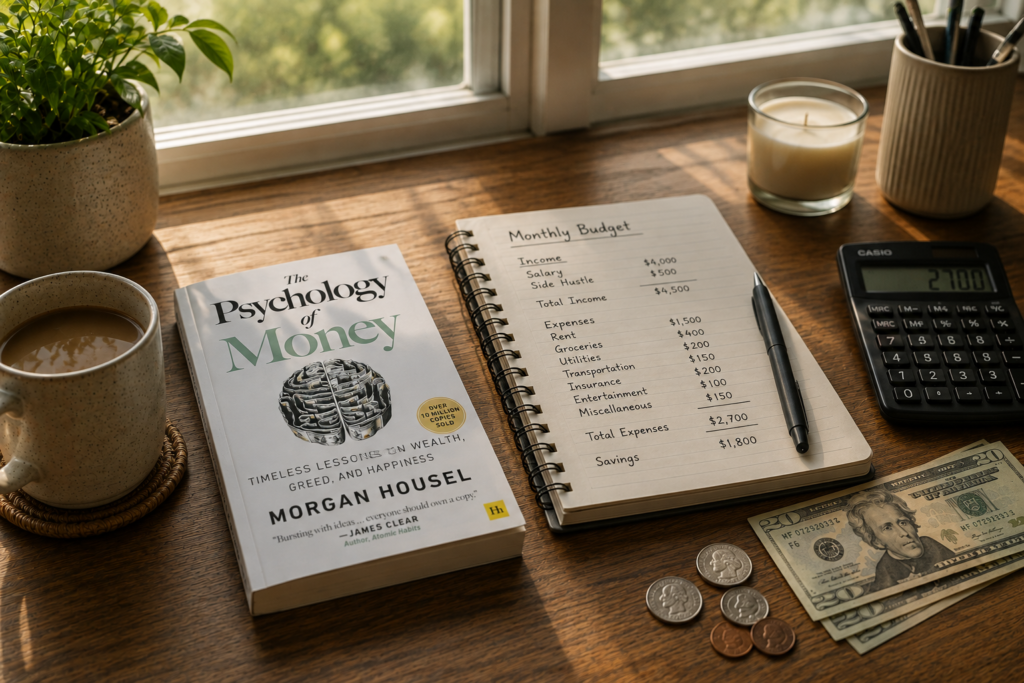
1. The Psychology of Money — Morgan Housel
We often think being good with money comes down to knowing what to do.
Save more. Invest wisely. Avoid unnecessary debt. Spend less than you earn.
All of that matters. But The Psychology of Money looks at something underneath the numbers: why do we make the financial decisions we make?
Morgan Housel explores how our relationship with money is shaped by our upbringing, experiences, emotions, goals and personal definition of security.
Someone who grew up watching their family struggle financially may become extremely cautious with money. Someone who experienced financial stability may be more comfortable taking risks. Two people with the same income can have completely different ideas about what a sensible financial life looks like.
Neither is necessarily irrational. They’re responding to different experiences.
That’s the book’s most valuable lesson: money is as much about behavior as it is about mathematics.
Why it matters
Our relationship with money changes as our circumstances change.
Early in a career, you might be learning how to budget and build savings. Later, you may be thinking about a home, children, retirement or financial independence. At another point, you may simply want enough security that money no longer occupies so much of your mental space.
Imagine receiving a significant pay increase and gradually increasing your lifestyle to match it. A more expensive car, more shopping, more holidays and more subscriptions can quietly absorb the extra income.
You earn more, but somehow still don’t feel like you have enough.
The book encourages you to ask a more meaningful question:
What kind of financial life am I actually trying to build?
There is no single perfect answer. Income, responsibilities, debt, goals and risk tolerance all matter. But understanding your own financial behavior can be just as important as learning the mechanics of investing and saving.
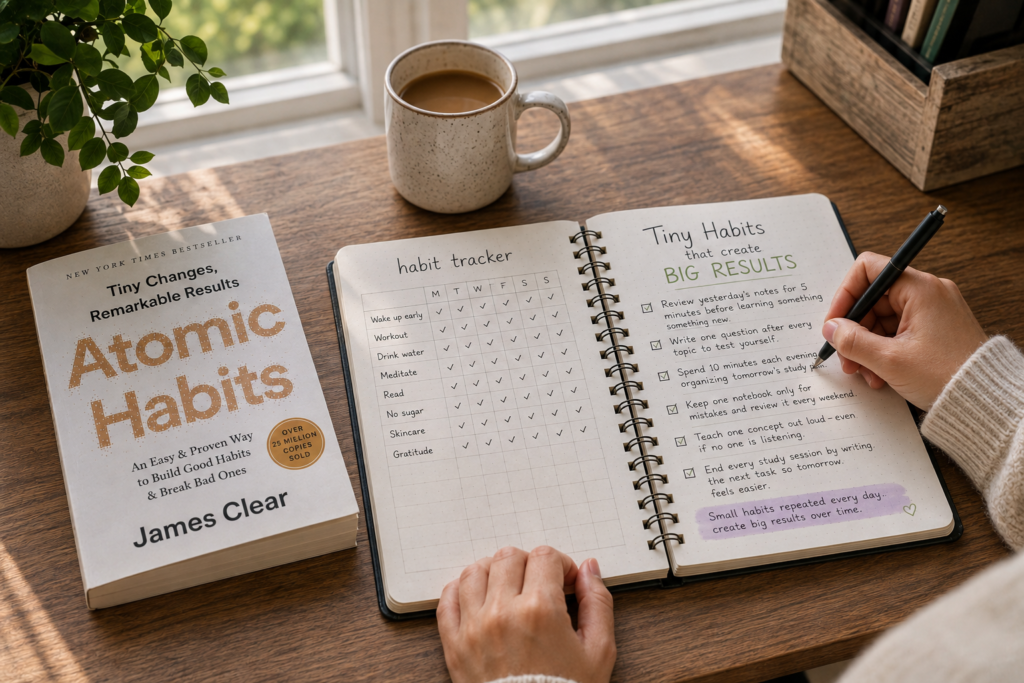
2. Atomic Habits — James Clear
Most of us already know what we should probably be doing.
Exercise regularly. Eat better. Read more. Stop procrastinating. Spend less time scrolling. Make more time for the people we love.
Knowing isn’t usually the difficult part.
Doing it consistently is.
Atomic Habits explores how small behaviors, repeated over time, can create significant results. James Clear’s approach focuses less on waiting for motivation and more on making useful behaviors easier to start and easier to repeat.
The idea applies whether you’re trying to improve your health, career, finances, relationships or everyday routines.
You don’t always need a dramatic transformation. Sometimes you need a behavior you can actually repeat.
A simple example
Imagine someone who has been saying, “I need to start exercising,” for years.
They decide that from Monday, they’ll work out six days a week for an hour. It sounds impressive, but the plan depends heavily on having enough time, energy and motivation every single day.
A different approach might be taking a 15-minute walk after dinner three times a week.
It isn’t exciting.
But it is sustainable.
Once a behavior becomes familiar, it can be built upon.
The same thinking can help with procrastination. Instead of asking, “Why am I so lazy?” you can ask, “What is making this task difficult to start?”
Perhaps your phone is beside you. Perhaps the task is too vague. Perhaps you’re expecting yourself to work for three hours when starting with 20 minutes would be more realistic.
Habits aren’t a magic solution. Responsibilities, health, environment and major life events can make routines difficult. But when inconsistency is the problem, small sustainable changes are often more useful than constantly trying to reinvent yourself.
3. Rework — Jason Fried & David Heinemeier Hansson
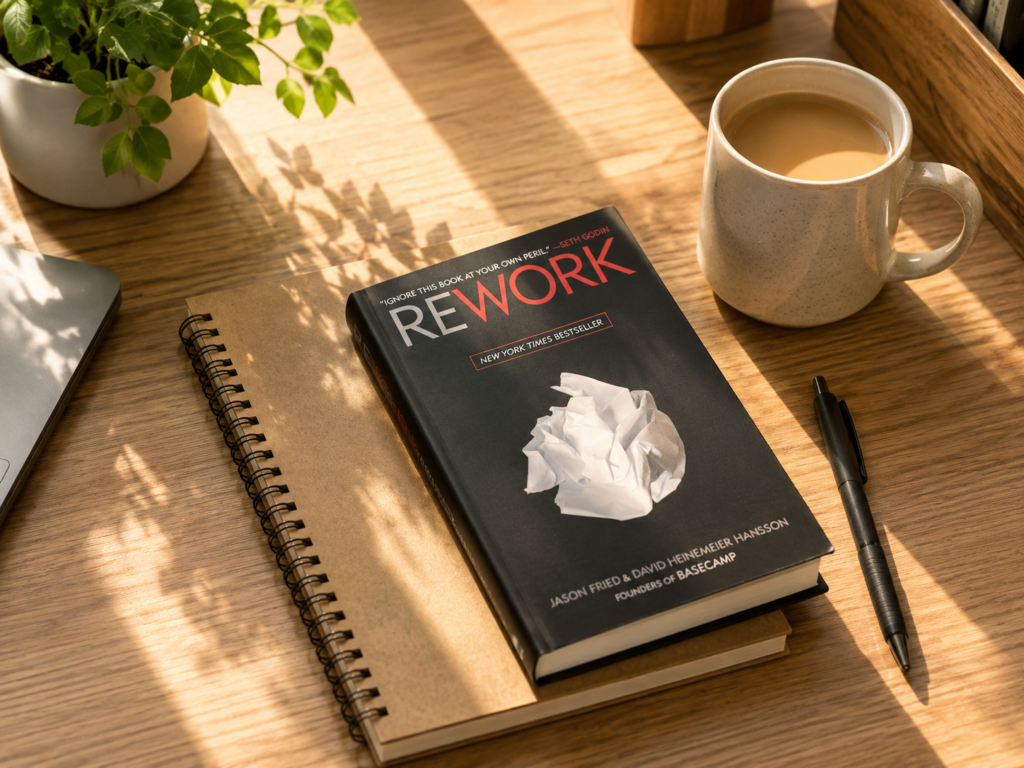
We’re taught to admire hard work.
And meaningful things often do require effort.
But Rework asks a useful question:
What if working harder isn’t always the answer?
Jason Fried and David Heinemeier Hansson challenge traditional ideas about work, productivity and business. They question unnecessary complexity, excessive planning and the assumption that being busy means you’re making progress.
That distinction matters.
An employee can spend an entire day in meetings and accomplish very little. A freelancer can spend hours answering messages instead of doing the work clients actually pay for. Someone building a business can spend months planning without ever testing the idea.
The problem isn’t always a lack of effort.
Sometimes it’s effort pointed in the wrong direction.
Stop preparing forever
Imagine someone wants to start an online business.
They spend six months researching competitors, choosing software, designing a logo and creating elaborate plans.
Eventually, they could learn far more by creating a simple version of the idea and showing it to a handful of real people.
That doesn’t guarantee success. It simply replaces speculation with information.
This is one of Rework’s strongest ideas: don’t automatically assume that the traditional way of doing something is the best way.
Of course, the book is deliberately opinionated. Not every workplace allows you to eliminate meetings or ignore established processes. Some industries require extensive planning, regulation and collaboration.
The lesson isn’t to ignore the rules.
It’s to occasionally ask:
Is this actually moving the important thing forward?
4. The Subtle Art of Not Giving a F*ck — Mark Manson

The title makes the book sound like an argument for not caring.
It isn’t.
At its heart, the message is much more useful: you cannot care deeply about everything, so you have to decide what deserves your care.
Your time, attention and emotional energy are limited.
If you spend them worrying about every criticism, comparison, disappointment and expectation, there won’t be much left for the things that genuinely matter.
Think about how often people make decisions based on other people’s expectations.
Someone stays in a career they dislike because their family considers it successful.
Someone remains in a relationship because they’re afraid of disappointing others.
Someone maintains a lifestyle they can barely afford because they don’t want to look like they’re falling behind.
Someone avoids trying something meaningful because failing publicly feels embarrassing.
A useful question is:
If nobody else had an opinion about this, would I still choose it?
The answer won’t always be no. Sometimes the things other people value genuinely matter to us.
That’s the distinction.
The goal isn’t to stop caring about people. It’s to become more intentional about which opinions, responsibilities and values deserve a place in your life.
This can become particularly important when your idea of success has been shaped by family, culture, social media or your workplace.
The book’s provocative style won’t appeal to everyone, and some of its ideas can feel simplified when taken literally. It’s better approached as an invitation to examine your priorities than as a rulebook for how little you should care.
The goal isn’t indifference.
It’s selectivity.
5. Tools of Titans — Tim Ferriss
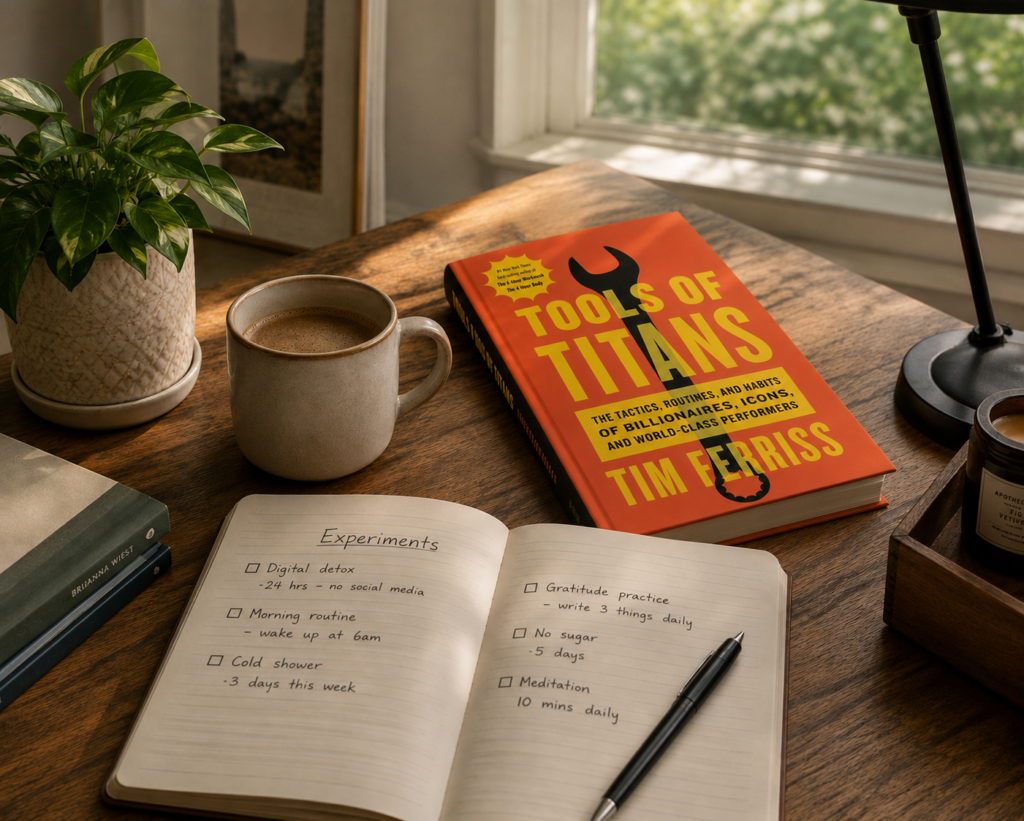
Tools of Titans takes a different approach from the other books on this list.
Tim Ferriss brings together lessons, routines, beliefs, strategies and mental models from people he interviewed on his podcast.
Entrepreneurs, athletes, investors, artists and other high performers share what they’ve learned about work, health, decision-making and life.
There are hundreds of ideas here, but you don’t need to copy them all.
In fact, you probably shouldn’t.
The more valuable lesson is this:
You can learn from other people’s experiments without assuming their methods will automatically work for you.
If a successful entrepreneur wakes up at 4:30 a.m., that doesn’t mean waking up at 4:30 is the secret to success.
If an athlete follows a particular diet, that doesn’t mean the diet explains their achievements.
If a writer works for three hours every morning, that doesn’t mean everyone needs the same schedule.
People succeed within particular circumstances. Their personalities, resources, responsibilities and goals are different.
So treat their ideas as experiments.
Try journaling for a few weeks. Test focused work sessions. Change your morning routine. Experiment with a different way of making decisions.
Then pay attention.
Did it actually help?
If it did, keep it. If it didn’t, let it go.
You don’t need someone else’s routine, career or philosophy.
You can simply ask: What can I learn from this person that might be useful in my own circumstances?
That’s a much healthier way to approach advice from successful people.
What These Five Books Have in Common
At first, these books seem unrelated.
One is about money. Another focuses on habits. One challenges traditional ideas about work. Another explores what deserves our attention. The last collects lessons from people who have achieved unusual things.
But underneath, they share something important.
They encourage you to become more intentional about how you live.
The Psychology of Money asks you to examine your relationship with wealth, spending, risk and security.
Atomic Habits makes you notice the small behaviors that quietly shape your days.
Rework challenges you to distinguish meaningful work from simply being busy.
The Subtle Art of Not Giving a Fck* asks you to become more selective about where you spend your emotional energy.
And Tools of Titans reminds you that other people’s experiences can be useful without becoming instructions you have to follow.
That’s why these books can remain relevant through different seasons of life.
You can read the same book five years from now and notice something completely different because you are different.
A chapter about money may mean something new when your responsibilities change. A lesson about habits may become more relevant when your health or schedule shifts. Advice about other people’s expectations may hit differently when you realize you’ve been pursuing a version of success that doesn’t actually feel like your own.
You don’t need to agree with everything these authors say.
Read critically. Question the advice. Try what seems useful. Leave what doesn’t fit your circumstances.
The goal isn’t to become someone who has read all the right books.
It’s to become someone who thinks a little more carefully about the life they’re building.
And sometimes, one useful idea is enough to make you pause, reconsider a decision and choose differently.
That’s a pretty good reason to read.